

Home of The Tax Professional
South Africa’s Largest Controlling Body for Registered Tax Practitioners

Why some taxpayers will get SARS refunds faster in 2026, and others won’t
The South African Revenue Service (SARS) has confirmed that taxpayers due refunds during the 2026 Filing Season can expect faster payments, with refunds of R100 or more generally processed within 72 hours of assessment, provided there are no banking, compliance or verification issues. However, taxpayers whose details require verification or whose tax affairs are incomplete may experience delays. SARS has encouraged taxpayers to ensure their banking and personal information is up to date and to carefully review their auto-assessments before accepting them, as accurate and complete information remains key to the swift processing of refunds.
1-minute read

Taxpayers Urged to Maximise Medical Tax Credits Ahead of Filing Season
As the 2026 Filing Season gets underway, taxpayers are being encouraged to ensure they claim all available medical tax benefits. A recent article highlights that contributions to a registered medical scheme qualify for the Medical Scheme Fees Tax Credit, while qualifying out-of-pocket medical expenses may also be claimed through the Additional Medical Expenses Tax Credit. Taxpayers are advised to verify that their medical aid tax certificates and dependant details are accurate, retain records of qualifying medical expenses, and review their auto-assessments carefully to ensure all eligible credits have been applied before submitting or accepting their tax returns.
3-minute read
Mandatory Online Traveller Declarations Now Required for Cross-Border Travel
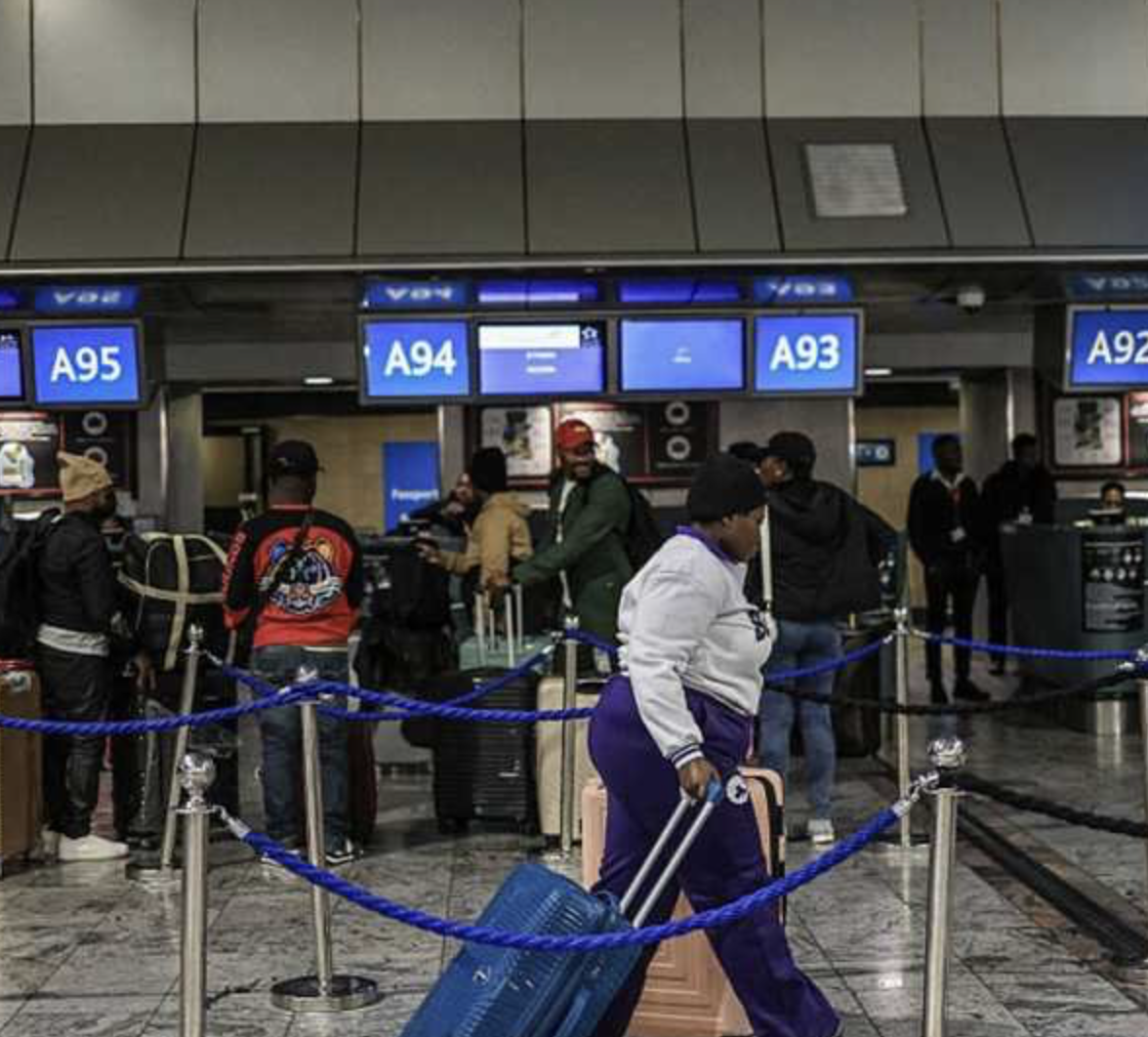
From 1 July 2026, all travellers entering or leaving South Africa by air, land, sea or rail are required to complete an online traveller declaration before travelling, unless they qualify for limited paper-based exceptions. The declaration, submitted through the South African Traveller Management System (SATMS), forms part of SARS’ customs modernisation programme and enables travellers to declare goods, currency and other relevant items before arriving at a port of entry or exit. The new requirement applies to South African citizens, residents and foreign travellers, with declarations to be submitted no more than 24 hours before departure.
3-minute read
Strengthen Your
Professional
Circle

TESTIMONIALS
 Name
Position
Name
Position
“Keep up the very excellent work, I feel very valued as a member of SAIT!! I wish all bodies could learn from you (Z. Ntuli; General Tax Practitioner; 30/04/2024).”
Name
Position
“I am very proud to be a member of SAIT because of the Membership Consultants (D. Ruthven, Tax Technician Practitioner, 23/04/2024).”
Name
Position
“All was properly explained to me. Excellent service (S.Thungo, General Tax Practitioner, 16/10/2024).”
Name
Position
“The Membership Billing consultants keeps members happy. Their service is the standard against which all professionalism should be measured (T. Bhengu, Chartered Tax Adviser, 20/06/2024).“
Name
Position
“Just to say a BIG THANK YOU! I am so grateful for the help and support (S.Hansen, General Tax Practitioner, 21/01/2025).”
Name
Position
“No recommendations or suggestions. I would like to add that I was very impressed by the friendly and efficient way in which the sales department assisted me with the registration process (W. Dodgen, Tax Technician Practitioner, 05/08/2024).”
Name
Position
"I have always found the staff at the SA Institute of Tax Practitioners a pleasure to work with. I often present seminars or provide input to legislation through or alongside Keitumetse Sesana who, like her colleagues, I find to be extremely professional whilst simultaneously warm and welcoming. I am proud to be a member of SAIT and to align with what it represents to me: a body which strives to ensure its tax partitioner members are well-educated in the field of taxation and that they follow a code of conduct that ensures that taxes are properly paid in an efficient manner to the mutual benefit of both their clients and the SA Revenue Service (Prof D. Tickle; 14-03-2025; CTA(SA))"
Name
Position
“Thank you for the assistance provided in bringing contentious matters to the attention of SARS and the National Treasury. The SAIT work groups are very beneficial for interacting with other tax professionals and the professional and efficient manner in which SAIT and Keitumetse Sesana liaise between tax professionals and SARS are highly regarded (Mrs H Cronje; 14-03-2025; MTP(SA)).”
Name
Position
“Wilna De Bruyn has been a valuable member of the SAIT Education & Assessment Committee and the reconstituted Education & Assessment Committee and has demonstrated institutional knowledge. She is proactive, responsive, and always willing to assist, going above and beyond the call of duty. In my capacity as deputy HOD of Accountancy at the University of Johannesburg, my portfolio includes stakeholders, and the Department of Accountancy values SAIT as a key stakeholder and partner. I have collaborated with Wilna for the past five years (Dr M Hassan, 19-04-2025, CTA(SA)).”
Name
Position
"I would like to express my deepest appreciation for the excellent service I receive from theSouth African Institute of Taxation (SAIT). Since becoming a member, every engagementwith the SAIT team has been a positive experience. The staff are always helpful,professional, and prompt in their responses. A special thank you to Keitumetse Sesane, Adriane Modikwe, Lungile Moodley, Boitumelo Mahlangu, Shamas Dube, and Charmaine van Rooyen—your supportwhenever I need assistance has been invaluable. Your dedication and willingness to go theextra mile never go unnoticed. SAIT also keeps members well-informed through constant updates, resources, and communication, which I truly value. I am proud to be affiliated with such a reliable andsupportive professional body. (Mrs O. Leisa, Master Tax Practitioner, 02/06/2025)."
Name
Position
"Thank you to SAIT for your continued leadership in shaping tax policy through meaningful engagement with Parliament. The submissions on the Draft TLAB and TALAB are vital for ensuring fair and effective legislation. Also, the reminder on interim reconciliations is much appreciated—compliance and accuracy remain key. Looking forward to further updates and insights. (Jabulani Malindi, Accounting Technician, 23/10/2025)."
Name
Position
"Thank you to South African Institute of Taxation and Deloitte for the kind invitation to the Advancing Women in Taxation Dialogue. It was a privilege to attend such a meaningful event focused on empowering women in the tax profession. A special thank you to the esteemed panel — Keitumetse Sesana, Ms. Yanga Mputa, Itireleng Kubeka, and Natasha Singh — for generously sharing your insights, experiences, and wisdom. (Tintswalo Nxumalo, General Tax Practitioner, 22/10/2025)."
Name
Position
"Thank you so much to SAIT and Deloitte for putting together such a powerful and inspiring event today. It was honestly such a privilege to be in that room. Ms Yanga was absolutely incredible, I could listen to her speak all day. And reconnecting with Keitu reminded me why I look up to her so much. She really walks the talk. Feeling very grateful. (Livhuwani Manenje, General Tax Practitioner, 22/10/2025)."
Name
Position
"What an inspiring initiative! 👏 It’s encouraging to see platforms like this being created to uplift and empower women in the tax profession. Kudos to South African Institute of Taxation, Deloitte, SARS, and all the incredible speakers and organizers. Looking forward to seeing even more women in tax represented and celebrated in future events! (Jabulani Malindi, Accounting Technician, 22/10/2025)."
Name
Position
" The pride I have being a member of South African Institute of Taxation really cannot be put in words! Honestly game changers in Taxation! Keitumetse Sesana the work you put in this year has been absolutely incredible as we approach the closing months of 2025 you have to get your 💐 for the hard work and dedication you and the team have put in this year! (Connor Hugh Robertson, Director of Expansive Accounting, 23/10/2025)."
Name
Position
"Great takeaways from the "Guardians of Integrity" Tax Practice on the Move event! It's so vital to constantly reinforce integrity, objectivity, and confidentiality in the tax profession. Upholding these ethical standards isn't just a compliance issue—it's the foundation of public trust and SAIT's reputation. Thanks to Adrian Modikwe-Ludick, Ronel Rust, and Warwick Scott-Rodger for sharing their expertise. 👏🥂✨️(Cloudify Tax & Bookkeeping, 30/10/2025)."
Name
Position
"Thank you, SAIT, for advocating on behalf of taxpayers and highlighting the broader economic impact of these proposed changes. It's vital that policy decisions consider long-term implications for South Africa’s competitiveness and attractiveness to global retirees. Well done to Ms. Sesana and the team for representing these concerns so effectively. 🥂(Cloudify Tax & Bookkeeping, 04/11/2025)."